Prompt library73 promptsCamera7 min read

Lens kit: cameras, lenses, focal lengths, aperture

Prompt library · from the ReelMe composer

73 looks with previews: copy a style prompt, add your subject, run it in ReelMe.

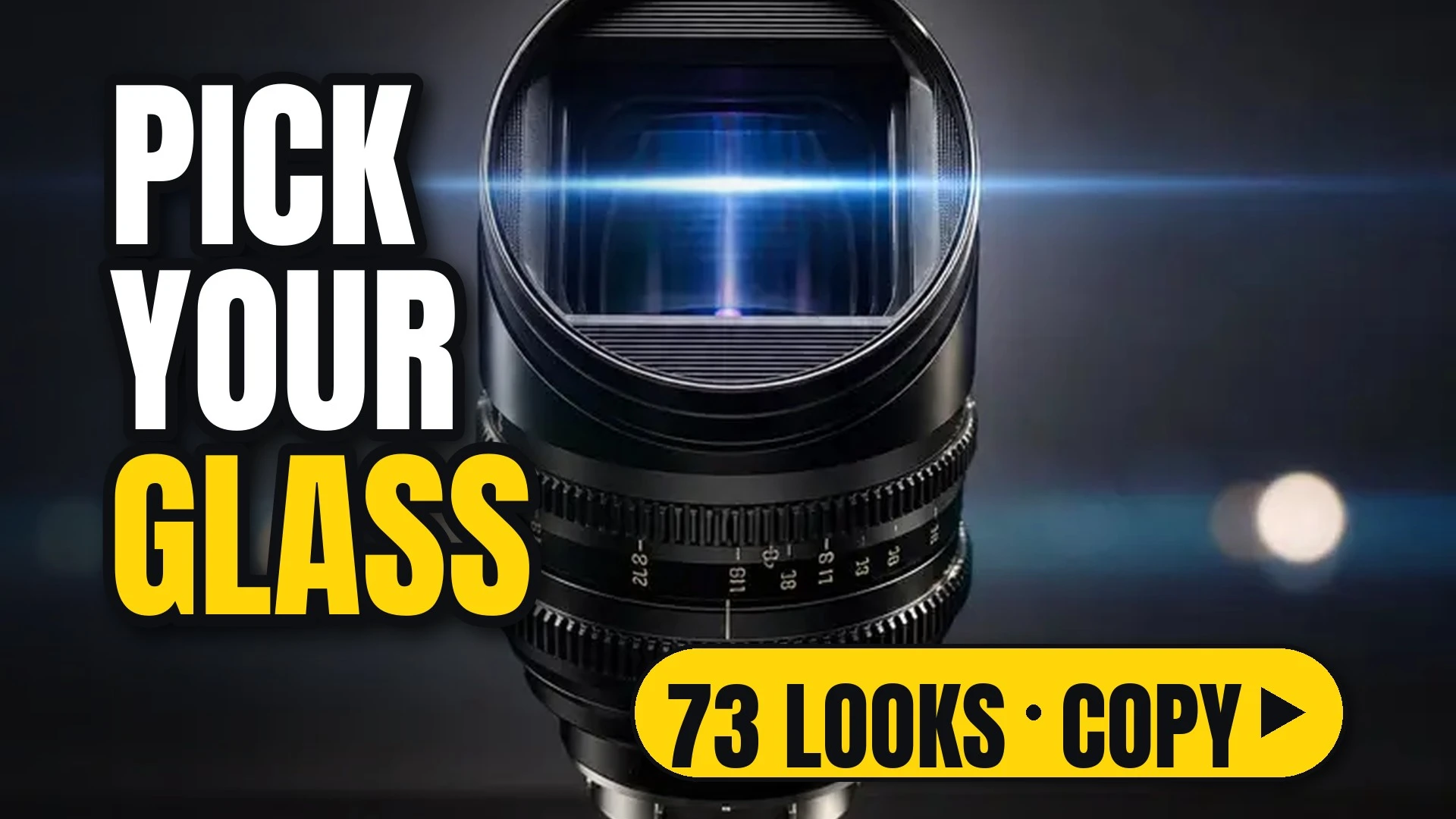
A cinema lens facing camera with a blue anamorphic streak flare and bokeh

73 looks. The camera body, lens, focal length and aperture look, written as what it does to the image.

How to use

Each look comes as a style prompt that starts with [your subject]. Replace it with what you are making (a perfume bottle on marble, a chef plating pasta, your character), keep the rest, and run it.

Make image or Make video opens ReelMe with the style prompt filled in. One camera move per clip; pair it with a shot size, not another move. Compare camera bodies and lenses on stills first in ReelMe Image (reelme.ai/image?aspect=16:9).

73 prompts

Camera bodies22

  • Clean digitalClean digitalImageVideo

    [your subject], clean modern digital look, smooth shadow gradation, faithful skin tones. Shadows roll off in long, even steps with no blocking; midtones stay neutral and clean, highlights hold detail before a gentle shoulder. Almost no grain, low noise in the blacks. NOT filmic grain.

  • Organic digitalOrganic digitalImageVideo

    [your subject], organic film-like digital texture, smooth highlight roll-off, rich contrast. Highlights fade softly instead of clipping, blacks are dense but keep detail, and a fine organic noise sits in the shadows. Color separation is rich without looking saturated. NOT harsh digital clipping.

  • Large-format digitalLarge-format digitalImageVideo

    [your subject], large-format look, sweeping depth, ultra-fine tonal transitions. Tonal steps between light and dark are extremely fine, large gradients stay smooth, and the frame feels wide and deep. Very low noise, neutral color. NOT a cramped small-sensor look.

  • 70mm film70mm filmImageVideo

    [your subject], large-format 70mm film look, fine grain, vast immersive scale. Contrast is deep with dense blacks, colors stay neutral, grain is extremely fine and even, and detail holds evenly out to the far corners. NOT coarse grain.

  • Modern 70mm filmModern 70mm filmImageVideo

    [your subject], modern large-format 70mm film look, epic analog immersion. Colors are rich and strongly saturated, blacks are very deep, highlights glossy with a soft roll-off, and grain is fine and tight. NOT a vintage, faded print.

  • 35mm film35mm filmImageVideo

    [your subject], 35mm film stock look, fine silver-halide grain, organic analog color. Colors run warm and slightly saturated, contrast is moderate with a soft shoulder in the highlights, and a medium-fine grain is visible across the whole frame, strongest in the shadows. NOT a clean digital surface.

  • Classic 35mm filmClassic 35mm filmImageVideo

    [your subject], classic 35mm feature film look, soft organic shadow detail. Contrast is low with open, soft shadows, colors are neutral rather than warm, and the grain is very fine and quiet, so the frame reads gentle and clean. NOT crushed, inky blacks.

  • Glossy large formatGlossy large formatImageVideo

    [your subject], large-format look, crisp micro-contrast, vivid color separation, glossy finish. Edges are crisp with strong micro-contrast, colors separate cleanly and vividly, and highlights have a glossy sheen while shadows stay clean and low in noise. NOT flat, low-contrast color.

  • Ultra-sharp digitalUltra-sharp digitalImageVideo

    [your subject], ultra-sharp modern digital look, strong micro-contrast, saturated color. Fine detail is resolved down to textures, micro-contrast is strong, colors are saturated and punchy, and noise is almost absent even in dark areas. NOT a soft vintage rendering.

  • Compact large formatCompact large formatImageVideo

    [your subject], compact large format cinema camera look with natural skin tones. Gradients stay smooth across the frame, skin and neutral tones read natural, contrast is moderate and noise stays low, with a sense of depth from the large sensor. NOT oversaturated color.

  • Punchy compact cinemaPunchy compact cinemaImageVideo

    [your subject], compact cinema camera look with punchy colors. Colors are bold and saturated, contrast is snappy with firm blacks, highlights are bright but held, and the image looks crisp with little noise. NOT muted pastel color.

  • Soft full-frameSoft full-frameImageVideo

    [your subject], full-frame cinema camera look with soft natural skin color. Skin and soft surfaces render smoothly, contrast is gentle, highlights bloom slightly, and colors are natural and slightly warm with fine, quiet noise. NOT harsh micro-contrast.

  • Warm full-frameWarm full-frameImageVideo

    [your subject], full-frame cinema raw look with warm tones. The whole image leans warm: amber midtones, golden highlights and warm brown shadows. Contrast is moderate, detail stays soft-sharp, noise is low. NOT cool or blue-shifted.

  • High dynamic range S35High dynamic range S35ImageVideo

    [your subject], Super 35 sensor look with enhanced dynamic range. The brightest and darkest areas both keep detail, highlights roll off without clipping, shadows are lifted just enough to read, and color stays natural. NOT blown-out highlights.

  • Extreme resolutionExtreme resolutionImageVideo

    [your subject], extreme resolution cinema camera look with fine detail. Every fine texture resolves: fine surface textures and distant edges stay sharp; contrast is clean and neutral with almost no noise. NOT soft focus.

  • Raw Super 35Raw Super 35ImageVideo

    [your subject], Super 35 sensor look with raw color. Colors look slightly flat and natural, as if ungraded, with wide latitude; contrast is soft, shadows keep detail and fine noise sits in the dark areas. NOT a punchy finished grade.

  • 35mm film texture35mm film textureImageVideo

    [your subject], 35mm film camera look with classic film texture. Grain is strong and clearly visible in every tone, colors are slightly faded with a warm cast, and edges are a little soft, like an old release print. NOT a clean digital look.

  • 16mm film16mm filmImageVideo

    [your subject], shot on 16mm film with visible grain and indie documentary texture. Grain is clearly visible and moving, detail is softer, colors are slightly muted, contrast is moderate and fine detail breaks up slightly. NOT a polished, glossy image.

  • Super 8 filmSuper 8 filmImageVideo

    [your subject], shot on Super 8 film with heavy grain nostalgic home movie aesthetic. Heavy, dancing grain, soft detail, warm faded color, slightly crushed blacks and soft blooming highlights, like a home movie projected years later. NOT sharp or clean.

  • 65mm film65mm filmImageVideo

    [your subject], shot on 65mm film with very high resolution and epic large format look. Contrast is soft and gentle, colors are muted and natural, grain is almost invisible, and tonal gradation from shadow to highlight is extremely smooth. NOT visible coarse grain.

  • Medium formatMedium formatImageVideo

    [your subject], medium format camera look with exceptional detail and color depth. Detail is exceptionally fine, color depth is rich with smooth transitions. Grain is absent and colors stay rich even in deep shadows. NOT a flat, small-sensor look.

  • RangefinderRangefinderImageVideo

    [your subject], rangefinder camera look with classic color and micro-contrast. Colors are classic and slightly warm, micro-contrast is crisp, blacks are rich and the image looks clean with little noise. NOT a cinematic widescreen feel.

Lenses21

  • Clinical primeClinical primeImageVideo

    [your subject], modern cine prime optics, clinical sharpness, neutral color, crisp round highlights. Sharpness is even from center to edge, contrast is high and color neutral, out-of-focus points render as clean round discs, and there is almost no distortion or flare. NOT dreamy or swirly.

  • Velvety primeVelvety primeImageVideo

    [your subject], premium large-format prime optics, velvety rendering, creamy round bokeh, gentle focus falloff. Focus falls off gently from the sharp plane, bokeh is large, round and creamy, contrast is soft and skin-friendly, with no harsh edges. NOT clinical edge-to-edge sharpness.

  • Warm 1970s glassWarm 1970s glassImageVideo

    [your subject], vintage 1970s glass, warm amber flares, soft blooming highlights. Bright sources bloom softly, flares glow warm amber, contrast drops slightly in the highlights and colors lean warm, like 1970s cinema glass. NOT modern clinical sharpness.

  • Warm classicWarm classicImageVideo

    [your subject], warm classic cinema lens look, gentle sharpness, painterly soft background. Sharpness is gentle rather than biting, skin and surfaces look warm, and the background melts into a soft, painterly blur with smooth transitions. NOT harsh, cold sharpness.

  • Golden vintageGolden vintageImageVideo

    [your subject], vintage cine glass, golden warm hues, soft dreamy edges. Colors lean golden, edges of the frame soften and glow, contrast is low and highlights bloom, giving a dreamy vintage rendering. NOT crisp edge-to-edge detail.

  • Anamorphic 1.8xAnamorphic 1.8xImageVideo

    [your subject], anamorphic look, oval bokeh, horizontal streak flares. Out-of-focus lights stretch into tall vertical ovals from the anamorphic squeeze, bright sources throw horizontal streak flares, and the frame has a broad, cinematic feel. Flares are neutral white. NOT round spherical bokeh.

  • Swirly vintageSwirly vintageImageVideo

    [your subject], vintage swirly bokeh, sharp center, dreamlike distorted edges. The center stays sharp while background highlights swirl in a circular pattern around it, edges soften and distort slightly, giving a dreamlike look. NOT clean, flat bokeh.

  • 1970s anamorphic1970s anamorphicImageVideo

    [your subject], vintage 1970s anamorphic look, blue streak flares, oval bokeh. Highlights throw long blue streak flares, bokeh stretches into ovals, contrast is slightly lower and colors feel vintage, like 1970s widescreen cinema. NOT round bokeh or clean modern flare control.

  • Clean 1990sClean 1990sImageVideo

    [your subject], clean 1990s cinema lens look, balanced contrast, slight blue flare. Contrast is balanced and color clean, sharpness is even, and bright sources pick up a faint blue flare, like polished 1990s studio films. NOT heavy vintage softness.

  • Modern anamorphicModern anamorphicImageVideo

    [your subject], modern anamorphic look, subtle barrel distortion, elegant streak flares. Straight lines bow slightly outward, flares are thin and elegant, bokeh is oval, and sharpness stays modern and clean across the frame. Flares are clean blue-white with little veiling glare. NOT heavy, messy vintage flare.

  • Anamorphic cinemaAnamorphic cinemaImageVideo

    [your subject], anamorphic lens, horizontal lens flares, oval bokeh, widescreen character. Bright lights stretch into horizontal flares, background points become ovals, and the frame feels wide and theatrical with slight edge softness. Flares are soft blue-white. NOT a standard spherical frame.

  • Warm anamorphicWarm anamorphicImageVideo

    [your subject], anamorphic lens with warm anamorphic flares and creamy bokeh. Flares glow warm amber and stretch horizontally, bokeh is creamy and oval, contrast is soft and the frame feels warm and filmic. NOT cold blue flares.

  • Neutral master primeNeutral master primeImageVideo

    [your subject], high-end prime with clinical sharpness and neutral color rendition. Sharpness is clinical and even, color neutral and true, contrast high, bokeh clean and round, with almost no distortion or flare. NOT warm vintage character.

  • Modern large-format primeModern large-format primeImageVideo

    [your subject], large format prime lens, full-frame coverage, modern sharpness. Full-frame coverage gives a wide field, sharpness is modern and even, and backgrounds separate smoothly from the subject. NOT a cropped, small-sensor feel.

  • Micro-contrast primeMicro-contrast primeImageVideo

    [your subject], cinema lens with exceptional micro-contrast and crisp rendering. Fine edges and textures pop, tonal separation between similar tones is strong, and the image looks crisp and three-dimensional without extra saturation. NOT low-contrast haze.

  • Petzval swirlPetzval swirlImageVideo

    [your subject], Petzval lens, swirly bokeh, sharp center focus, vintage portrait rendering. The center is sharp while the background spins into a swirling blur, edges soften strongly and highlights glow, like a vintage portrait lens. NOT flat, even background blur.

  • Selective focusSelective focusImageVideo

    [your subject], selective sweet-spot focus lens with creative blur. A small sweet spot stays sharp while the rest of the frame falls into a smooth, directional blur, guiding the eye to one point. NOT sharp from edge to edge.

  • Plastic toy lensPlastic toy lensImageVideo

    [your subject], plastic toy lens with heavy vignette, light leaks and lo-fi aesthetic. Corners darken into a heavy vignette, light leaks bleed in warm streaks, sharpness is soft and uneven, and colors shift slightly, giving a lo-fi feel. NOT clean, corrected optics.

  • Mirror lensMirror lensImageVideo

    [your subject], catadioptric mirror lens, donut-shaped bokeh, compressed telephoto perspective. Out-of-focus highlights turn into donut-shaped rings, the background is strongly compressed behind the subject, and contrast is slightly low. NOT round, solid bokeh.

  • Soft-focus portraitSoft-focus portraitImageVideo

    [your subject], soft-focus portrait lens with dreamy glow and flattering skin smoothing. A soft glow surrounds highlights, fine detail is gently smoothed, contrast is low and the image feels dreamy while the main shapes stay readable. NOT harsh, crisp detail.

  • Fast vintage primeFast vintage primeImageVideo

    [your subject], fast prime with smooth bokeh and vintage character. Shallow focus gives smooth, rounded bokeh, highlights bloom slightly, contrast is softer at wide aperture and colors have a gentle vintage warmth. NOT clinical modern rendering.

Focal lengths22

  • 8mm8mmImageVideo

    [your subject], 8mm ultra-wide rectilinear view, straight lines, huge foreground, deep focus, about a 132.1-degree horizontal view; at three metres the frame is about 13.5 m wide. Background appears very far away. NOT any background compression.

  • 14mm14mmImageVideo

    [your subject], 14mm ultra-wide view, stretched perspective, sharp from edge to edge, about a 104.3-degree horizontal view; at three metres the frame is about 7.7 m wide. Depth feels deep and pulled apart. NOT a natural eye-level look.

  • 24mm24mmImageVideo

    [your subject], 24mm wide view, immersive framing, natural depth, sharp background, about a 73.7-degree horizontal view; at three metres the frame is about 4.5 m wide. Background remains sharp and present. NOT a shallow, isolated look.

  • 35mm35mmImageVideo

    [your subject], 35mm natural eye perspective, subject balanced with the surroundings, about a 54.4-degree horizontal view; at three metres the frame is about 3.1 m wide. Background is soft-sharp and present. NOT a telephoto look.

  • 50mm50mmImageVideo

    [your subject], 50mm natural proportions, no distortion, subject gently separated from background, about a 39.6-degree horizontal view; at three metres the frame is about 2.2 m wide. Background softens gently. NOT a wide distorted view.

  • Close reference: 85mm75mmImageVideo

    [your subject], 75mm telephoto portrait, compressed background, gently flattened proportions, about a 27.0-degree horizontal view; at three metres the frame is about 1.4 m wide. Background is pulled in and clearly blurred. NOT the setting in focus.

  • Close reference: 135mm125mmImageVideo

    [your subject], 125mm long telephoto, strong compression, background stacked behind the subject, about a 16.4-degree horizontal view; at three metres the frame is about 86 cm wide. Separation is strong and backgrounds look flat. NOT a deep, open space.

  • 12mm12mmImageVideo

    [your subject], 12mm ultra wide angle with dramatic perspective and visible distortion, about a 112.6-degree horizontal view; at three metres the frame is about 9.0 m wide. Distant objects shrink sharply. NOT straight, undistorted edges.

  • 16mm16mmImageVideo

    [your subject], 16mm wide angle with environmental context and slight distortion, about a 96.7-degree horizontal view; at three metres the frame is about 6.7 m wide. Background stays sharp and readable. NOT a tight crop on the subject.

  • 18mm18mmImageVideo

    [your subject], 18mm wide angle with natural perspective and minimal distortion, about a 90.0-degree horizontal view; at three metres the frame is about 6.0 m wide. Background reads clearly behind them. NOT strong edge stretching.

  • 21mm21mmImageVideo

    [your subject], 21mm wide angle with classic cinema perspective, about a 81.2-degree horizontal view; at three metres the frame is about 5.1 m wide. Background keeps clear shapes. NOT a telephoto squeeze.

  • 28mm28mmImageVideo

    [your subject], 28mm moderate wide angle with balanced perspective, about a 65.5-degree horizontal view; at three metres the frame is about 3.9 m wide. Background stays readable. NOT a compressed background.

  • 32mm32mmImageVideo

    [your subject], 32mm standard focal length with natural human perspective, about a 58.7-degree horizontal view; at three metres the frame is about 3.4 m wide. Background is in context but secondary. NOT wide-angle stretch.

  • 40mm40mmImageVideo

    [your subject], 40mm standard focal length with intimate neutral perspective, about a 48.5-degree horizontal view; at three metres the frame is about 2.7 m wide. Background begins to recede behind them. NOT stretched edges.

  • 65mm65mmImageVideo

    [your subject], 65mm short telephoto with gently flattened proportions, about a 31.0-degree horizontal view; at three metres the frame is about 1.7 m wide. Background draws a little closer and softens. NOT wide-angle exaggeration.

  • 85mm85mmImageVideo

    [your subject], 85mm classic portrait lens with clear subject isolation and compression, about a 23.9-degree horizontal view; at three metres the frame is about 1.3 m wide. Background melts into soft blur close behind. NOT a sharp background.

  • 100mm100mmImageVideo

    [your subject], 100mm telephoto with strong background separation and compression, about a 20.4-degree horizontal view; at three metres the frame is about 1.1 m wide. Background is compressed and strongly separated. NOT environmental context.

  • 135mm135mmImageVideo

    [your subject], 135mm telephoto with compressed perspective and creamy bokeh, about a 15.2-degree horizontal view; at three metres the frame is about 80 cm wide. Background compresses into soft color shapes. NOT a wide view.

  • 200mm200mmImageVideo

    [your subject], 200mm telephoto with strong compression and distant subject isolation, about a 10.3-degree horizontal view; at three metres the frame is about 54 cm wide. Background looks large and close. NOT a sense of distance.

  • 300mm300mmImageVideo

    [your subject], 300mm super telephoto with extreme compression and flattened perspective, about a 6.9-degree horizontal view; at three metres the frame is about 36 cm wide. Perspective flattens strongly. NOT natural depth between layers.

  • 400mm400mmImageVideo

    [your subject], 400mm super telephoto with dramatic compression and subject magnification, about a 5.2-degree horizontal view; at three metres the frame is about 27 cm wide. Layers stack into flat planes. NOT environmental context around the subject.

  • 600mm600mmImageVideo

    [your subject], 600mm ultra telephoto with extreme reach and massive compression, about a 3.4-degree horizontal view; at three metres the frame is about 18 cm wide. Depth almost vanishes into flat layers. NOT any visible perspective depth.

Aperture8

  • f/1.4f/1.4ImageVideo

    [your subject], shot at f/1.4, razor-thin focus, background melts into soft blur. Only a thin slice of the subject is in focus, everything in front and behind dissolves into large, smooth blur, and highlights become big soft discs. NOT deep focus.

  • Close reference: f/1.4f/2ImageVideo

    [your subject], shot at f/2, shallow focus, the background a soft blur. The subject is sharp while the background turns into a soft, even blur with round highlights, keeping a little shape of the surroundings. NOT everything in focus.

  • Close reference: f/4f/2.8ImageVideo

    [your subject], shot at f/2.8, the subject crisp, the background clearly soft. The subject is crisp across its depth, the background is clearly soft but its main shapes remain recognizable. NOT razor-thin focus.

  • f/4f/4ImageVideo

    [your subject], shot at f/4, subject sharp, background softly blurred but readable. The subject is sharp and the background softly blurred but still readable, so the setting gives context without distracting. NOT a fully melted background.

  • Close reference: f/4f/5.6ImageVideo

    [your subject], shot at f/5.6, the subject and the near background both sharp. The subject and the near background are both sharp, with only gentle softening further back, giving clear context around the subject. NOT shallow blur.

  • Close reference: f/11f/8ImageVideo

    [your subject], shot at f/8, sharp through most of the scene. Most of the scene from near to far is in focus, edges are crisp and the background reads in detail behind the subject. NOT a blurred background.

  • f/11f/11ImageVideo

    [your subject], shot at f/11, deep focus, sharp from foreground to horizon. Focus runs deep from the foreground to the horizon, details far away stay sharp and the whole frame reads clearly. NOT selective focus.

  • Close reference: f/11f/16ImageVideo

    [your subject], shot at f/16, everything sharp, crisp edges front to back. Every plane from the closest object to the far distance is sharp, edges are crisp front to back and nothing is blurred. NOT any background blur.

Make it in ReelMe

Settled on your kit? Shoot with it in ReelMe Video using the same lens prompt. Keep one body and one lens per film so every shot matches.

Nov 12, 2026

How it works

3 steps

  1. Pick a look

    Choose one of the 73 camera and lens looks and copy its prompt.

  2. Add your subject

    Replace [your subject] with what you are making; keep the rest.

  3. Run it in ReelMe

    Paste it into ReelMe Image at reelme.ai/image?aspect=16:9 and generate.

  • Camera · Prompt library · from the ReelMe composer

    44 looks with previews: copy a style prompt, add your subject, run it in ReelMe.

    1. Pick a look: Choose one of the 44 lens effects and copy its prompt.
    2. Add your subject: Replace [your subject] with what you are making; keep the rest.
    3. Run it in ReelMe: Paste it into ReelMe Video at reelme.ai/video?mode=t2v and generate.
  • Framing

    Prompt library

    Camera · Prompt library · from the ReelMe composer

    60 looks with previews: copy a style prompt, add your subject, run it in ReelMe.

    1. Pick a look: Choose one of the 60 framings and copy its prompt.
    2. Add your subject: Replace [your subject] or [your subjects] with what you are making.
    3. Run it in ReelMe: Paste it into ReelMe Image at reelme.ai/image?aspect=16:9 and generate.
  • Camera · Prompt library · from the ReelMe composer

    19 looks with previews: copy a style prompt, add your subject, run it in ReelMe.

    1. Pick a look: Choose one of the 19 shot sizes and angles and copy its prompt.
    2. Add your subject: Replace [your subject] or [your subjects] with what you are making.
    3. Run it in ReelMe: Paste it into ReelMe Image at reelme.ai/image?aspect=16:9 and generate.

Want it step by step? From Zero to AI Creator